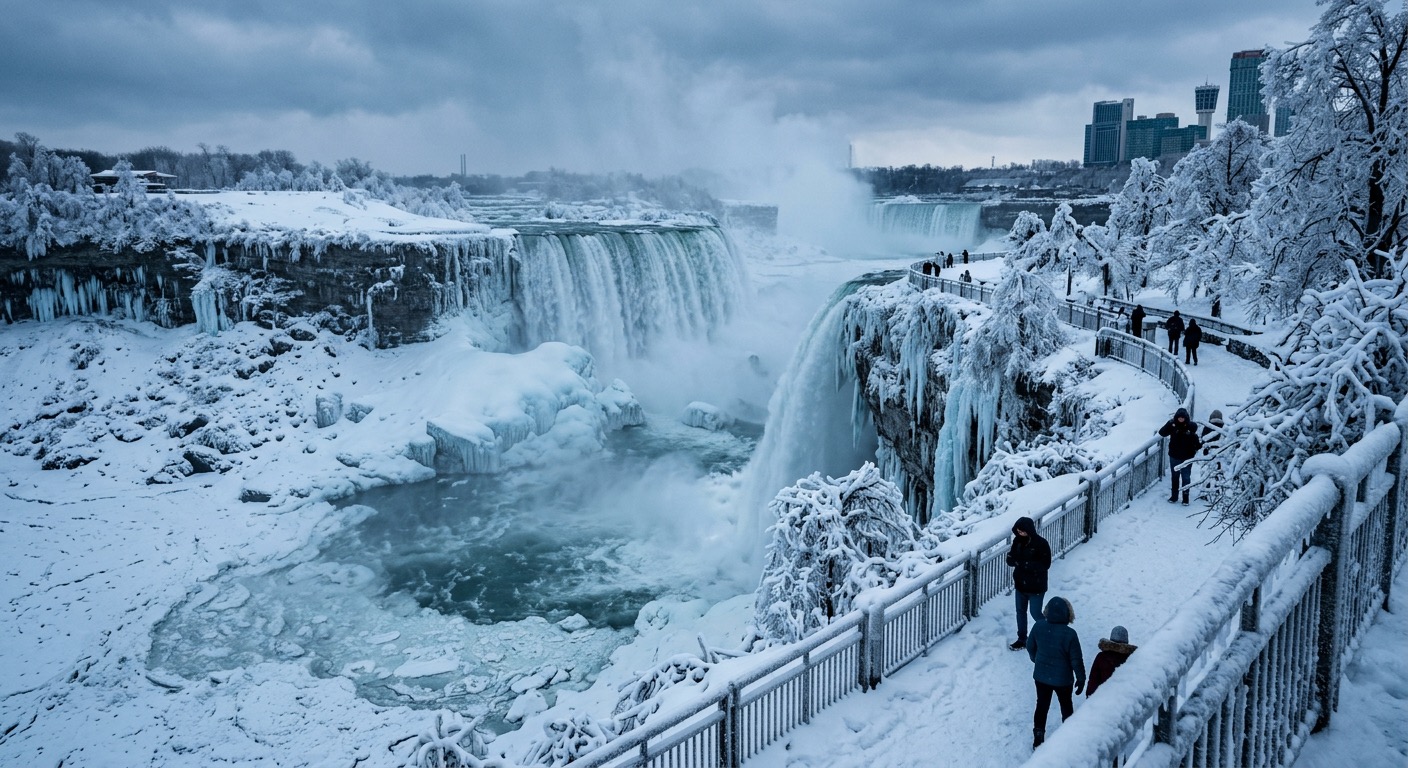
Does Niagara Falls Freeze? The Frozen Falls Explained
The falls never fully stop, but they do build extraordinary ice formations. Here's what actually happens in winter and when to see it.
The Short Answer
Niagara Falls never completely freezes. The volume of water — over 750,000 US gallons per second — and the drop height prevent a total freeze-over. But the mist, spray, and river edges do freeze, creating massive ice formations called an "ice bridge" at the base.
The last time the falls appeared to stop flowing was March 29, 1848, when an ice dam on Lake Erie blocked the river upstream. The falls ran dry for about 30 hours. It has not happened since.
What You Actually See in Winter
When temperatures drop below -15°C for sustained periods (typically January through early March), the mist freezes onto every surface near the falls. Trees, railings, rocks, and viewing platforms get coated in thick ice. The spray creates enormous icicle formations on the cliff face.
The "ice bridge" — a thick layer of ice chunks that forms at the base of the falls — can be several metres thick. You cannot walk on it (this was banned after three tourists fell through in 1912). But you can see it clearly from the gorge rim.
The most dramatic frozen-falls events happen during polar vortex cold snaps, when temperatures stay below -20°C for days.
When to See the Frozen Falls
The best chances for dramatic ice formations are mid-January through February. Extended cold snaps of -15°C or colder are needed for significant ice buildup. Check the weather forecast before driving — a mild winter may produce little ice.
The viewing is best from Table Rock on the Canadian side. Dress for extreme wind chill — the gorge funnels cold air and the mist makes it feel 10-15 degrees colder than the reported temperature.
The Winter Festival of Lights runs November through January, adding illumination to the ice formations at night. The combination of ice and coloured lights is genuinely beautiful.
Frequently Asked Questions
Has Niagara Falls ever completely frozen?
The falls have never completely frozen solid. In 1848, an ice dam on Lake Erie stopped the water flow for about 30 hours, but the falls themselves didn't freeze — the river feeding them was simply blocked.
When is the best time to see Niagara Falls frozen?
Mid-January through February during extended cold snaps below -15°C. Polar vortex events produce the most dramatic ice formations.
Can you walk on the ice at the base of Niagara Falls?
No. Walking on the ice bridge has been banned since 1912 after three tourists fell through and drowned. The ice is unstable and extremely dangerous.